By James T. Cunningham
History Is Made at Night (1937), Directed by Frank Borzage, written by Gene Towne, C. Graham Baker, and Vincent Lawrence, and stars Charles Boyer, Jean Arthur, Colin Clive, Leo Carrillo, and Ivan Lebedeff.
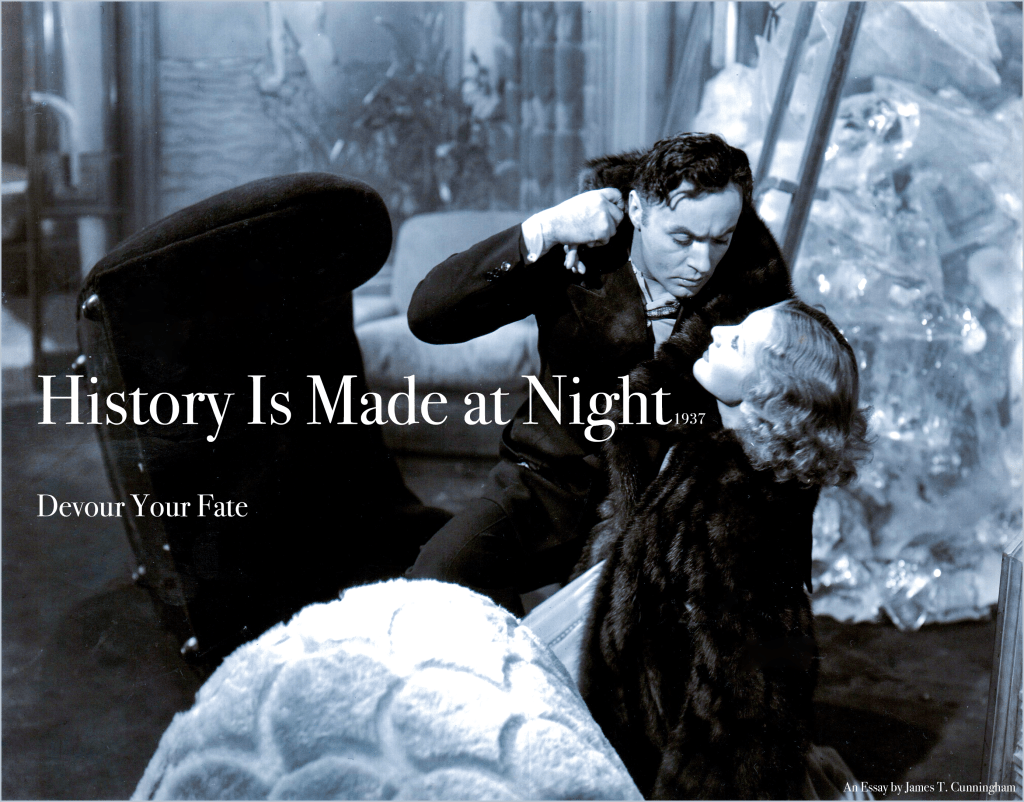
A work of art has this uncanny ability of exposing viewers to things unknown. There exists a hidden world beneath ours in which writers, painters, filmmakers, musicians, etc. plunge themselves into and return with something that tells us about it. Something greater than we can imagine. And every so often the artist wades deeper into that bottomless, dark well than they have ever before. So deep, that when they return with their finished work, the world as we know it will never be the same. They had unknowingly tapped into something cosmic. These particular pieces of art affect the viewer in a different way because they transcend the form in which they were created. For this is not merely a work of art but an open window gazing upon fate itself.
History Is Made at Night is an exceptional American film. One conceived and constructed during the “Golden Age of Hollywood” that acts as a shining pillar of everything studio filmmaking could be. But still, there is more here than meets the eye. There is a loose thread that, if followed, draws you further and further into that unknown world. Into the woven fabric of fate that will send our star-crossed lovers into one another’s arms.
The cost? Everything.
Perhaps it wasn’t fate all along, but rather true love. Is there a difference? One thing is for certain: Director Frank Borzage believed deeply in both.
Despite a prolific run of filmmaking that spanned early silent cinema to the star-studded Hollywood productions of the 30s and 40s, Borzage is little discussed among comrades like Frank Capra or Michael Curtiz. But when the definitive history of film is eventually written, Borzage will be fondly remembered for being the first person to win a Best Director award for his 1927 film, 7th Heaven, at the first Oscar ceremony in 1929.
His film career started more than ten years prior to the Oscar win when Borzage began making silent shorts for studios. Over the ensuing decades he would continue to cut his teeth on studio backlots so by the time he arrives onset to shoot History Is Made at Night, all the pieces are in place.
It’s important to note that Borzage initially moved to Hollywood in hopes of becoming an actor. He bounced around the silent film studios for a few years before earning the opportunity to get behind the camera. His background as an actor very much informs the performances he gets out of his. They are big and dramatic. Human and sensitive. Charles Boyer and Jean Arthur are fearless in the picture, just the way people are when they fall head-over-heels in love. His effortless sophistication meets the perfect match in Athur’s bubbly humor. Nothing could keep them apart.
Upon release, History Is Made at Night became noteworthy for the way it seamlessly blends genres. It’s refreshing to see in a film from 1937, but at the time people weren’t sure what to make of it. Audiences sometimes do not immediately respond to art when it is something they haven’t seen before. It isn’t until these pieces of art are given the gift of time that we can look back and reflect on how brazen and original the piece was. The same could be said for the genre-bending taking place in History Is Made at Night. Modern audiences might not blink an eye, but for 37’ it was somewhat groundbreaking.
The movie follows frightened wife Irene Vail (Jean Arthur) as she tries to divorce her domineering husband, Bruce (Colin Clive). Bruce learns this and sets up a sting operation to make it look like his wife is cheating so he can get pictures to protect his family’s unimaginable fortune. But when the set-up is bungled by an eyewitness, Paul Dumond (Charles Boyer), Bruce must do everything he can to tear their love apart. As the story unfolds, it moves from mellow drama to thriller to full-blown disaster movie. All while Irene and Paul drift in and out of each other’s lives and chase that unbinding love. A person’s life is never one thing. It splinters and splits into a million directions with a trillion different outcomes. The tone of the story engages in a dialogue with that idea.
Now, there has been much conversation about love and fate, but it is time that a clear case must be made.
It’s time to introduce the “Theory of 37.”
As research commenced on this piece, a strange thing began to reoccur. First, we start with the movie itself. History Is Made at Night was released on March 27, 1937. The film has a runtime of 1 hour and 37 minutes. Weird, right? Well, in the film, a reference is made to riding the Hindenburg across the Atlantic instead of a boat. Shortly after the film’s release, the Hindenburg would burst into flames, killing 36 people on May 6, 1937. And finally, our dearly beloved Colin Clive would develop the tuberculosis after filming that would ultimately kill him on June 25, 1937.
He was 37.
If this were your average Hollywood production, perhaps these coincidences could be written off as such. But it’s not.
At the end of the film, Irene and Paul board one of Bruce’s luxury cruise liners in the hopes of getting away from him. When Bruce learns this, he orders the boat to power full steam ahead into the iceberg-filled night. The ship crashes and sinks, but our two star-crossed lovers make it off alive. Upon learning of the destruction, Bruce Vail quietly walks into his study, writes a note of forgiveness, and then shoots himself in the head.
He sealed his fate.
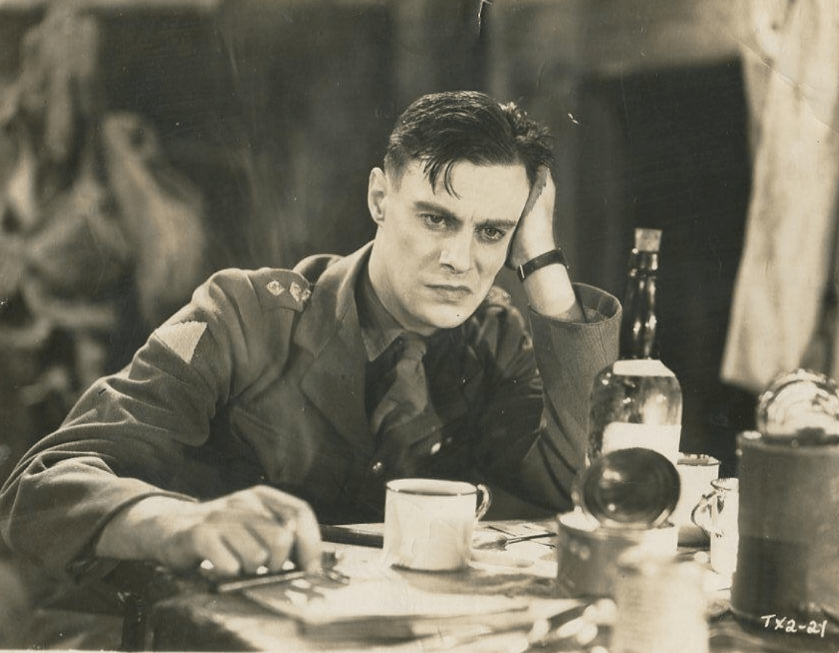
Colin Clive was an actor who looked as though he were doomed from birth. And knew it. He came up through the London theater with James Whale before embarking on a short but impressive Hollywood career. He is magnetic in the role of Bruce Vail, and in another life, in another world, it’s not hard to picture him in Charles Boyer’s role. A leading man with his chest puffed out and eyes glinting in key light, but that was not what fate had decided. Instead, a debilitating case of alcoholism ravaged his body and turned him into an anxious phantom. Left to stalk and loom in the corners of the frame, ready to pounce on Irene and Paul at a moment’s notice. So corrupt with jealousy it’s spilling out of every pore of his body, choking the air in every room he walks into.
Clive will always exist in cinema history for his portrayal of Henry Frankenstein in James Whale’s 1931 masterpiece, Frankenstein. In fact, his co-star from that film, Mae Clark, summed up Colin Clive better than anyone else when she said, “He was the handsomest man I ever saw—and also the saddest.”
We will never know how close Clive knew he was to the end while making this film, but when you watch History Is Made at Night you get a sense that he understood it was near. Just like the Hindenburg or the sinking of the Titanic in the rearview mirror.
Perhaps it was just fate all along.
This essay is dedicated to Colin Clive (1900 – 1937), Hayden Panettiere (1989 – 2026) and all the talent gone too soon.


Leave a Reply